
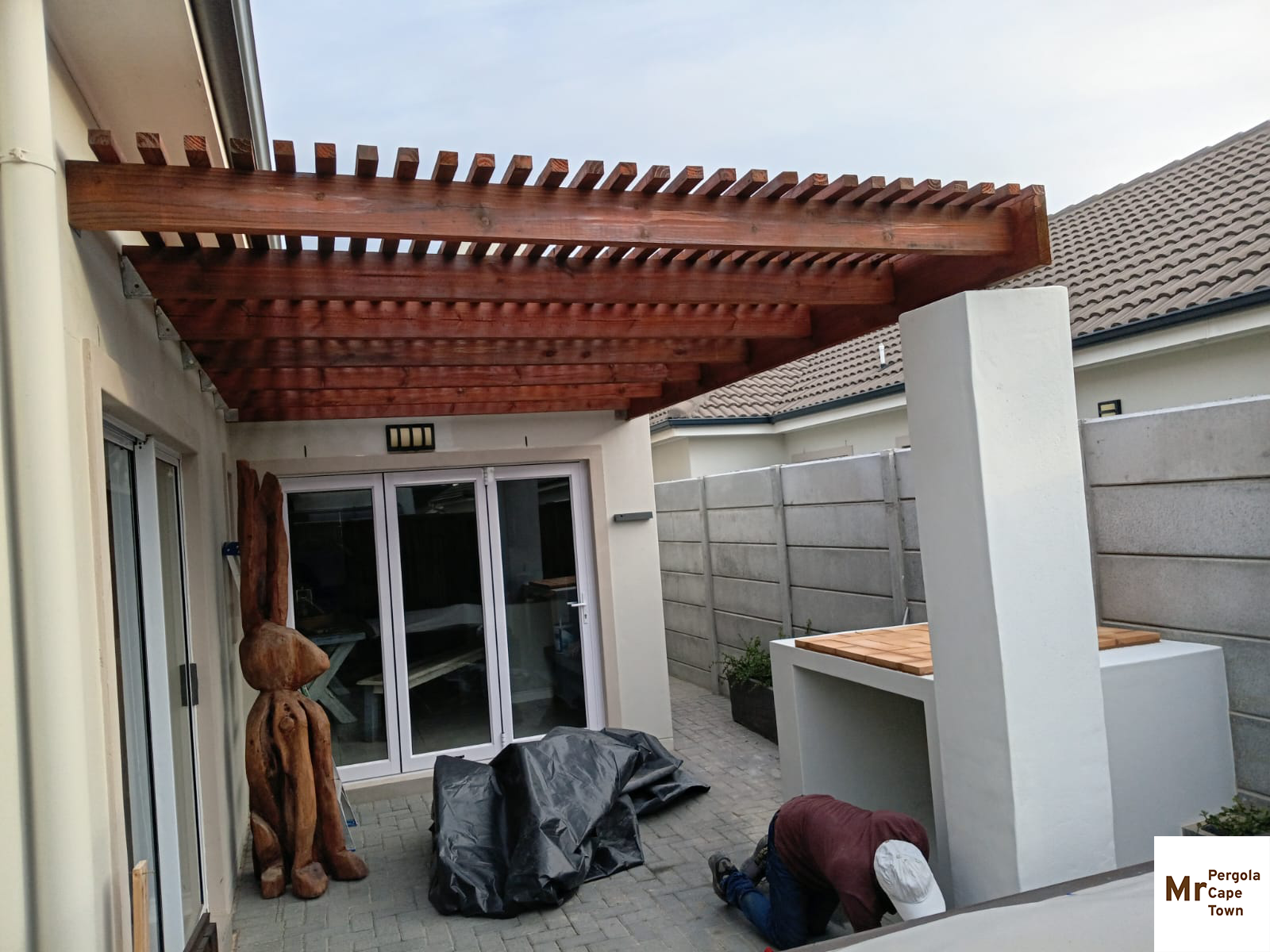
Treated Pine Pergola Installation in Kraaifontein
Kraaifontein, Cape Town
6 – 20 May, 2026
14 Days
Project at a Glance
PROJECT SPECIFICATIONS
| Location | Kraaifontein, Cape Town |
| Pergola Type | Lean-to (attached to wall) |
| Dimensions | 4.9m long × 2.86m wide |
| Wood Species | CCA H3 Treated Pine |
| Finish | Rystix Timbacare – Oak Tone Sealant |
| Roof Type | Open slats, spaced 50mm apart |
| Beam Profile | 228mm × 50mm |
| Rafter Profile | 150mm × 50mm |
| Batten Profile | 38mm × 50mm |
| Column | Brick column with concrete footing (corner) |
| Council Approval | Approved by the City of Cape Town |
| Purpose | Outdoor resting and entertainment area |
CLIENT BRIEF
What the Client Wanted to Achieve
The homeowners at Stonewood Estate in Kraaifontein had an underutilised outdoor area attached to their home that offered very little shelter or visual appeal. Their vision was straightforward but important: transform the space into a comfortable outdoor area the whole family could use, somewhere to relax, host guests, and enjoy Cape Town’s evenings without retreating indoors.
The brief called for a structure that felt permanent and well-built, not a temporary solution. The clients wanted the pergola to integrate cleanly with the existing wall of the house and to last for many years without constant maintenance.
Key Client Requirements
- A shaded, comfortable outdoor entertainment and resting area
- A structure attached to the existing house wall for a seamless look
- Durability suited to Cape Town’s variable climate, including strong summer winds
- Proper council approval to protect the property’s compliance record
- An oak-toned finish to complement the home’s aesthetic
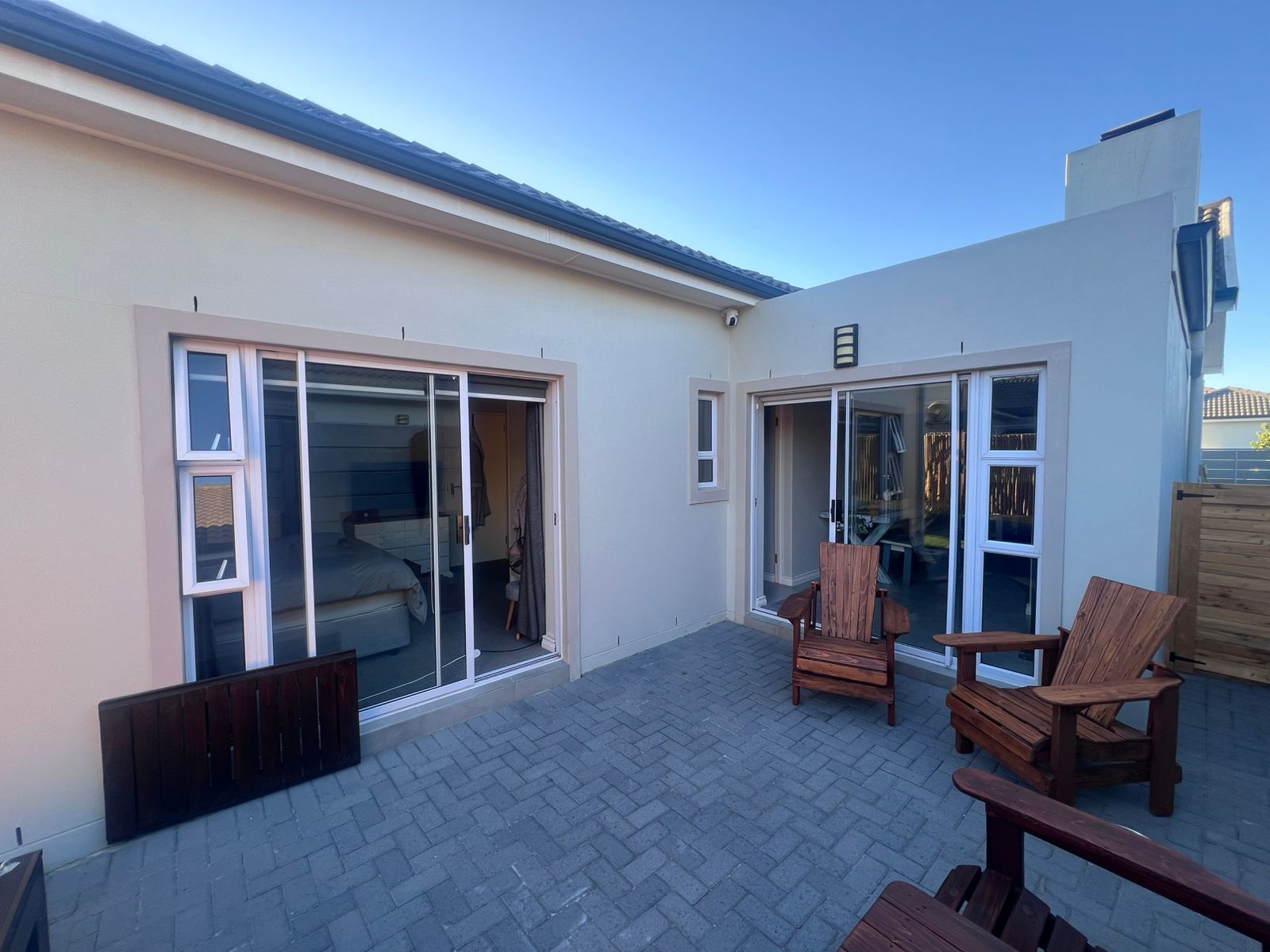
3D Visualisation: Seeing the Pergola Before It Was Built
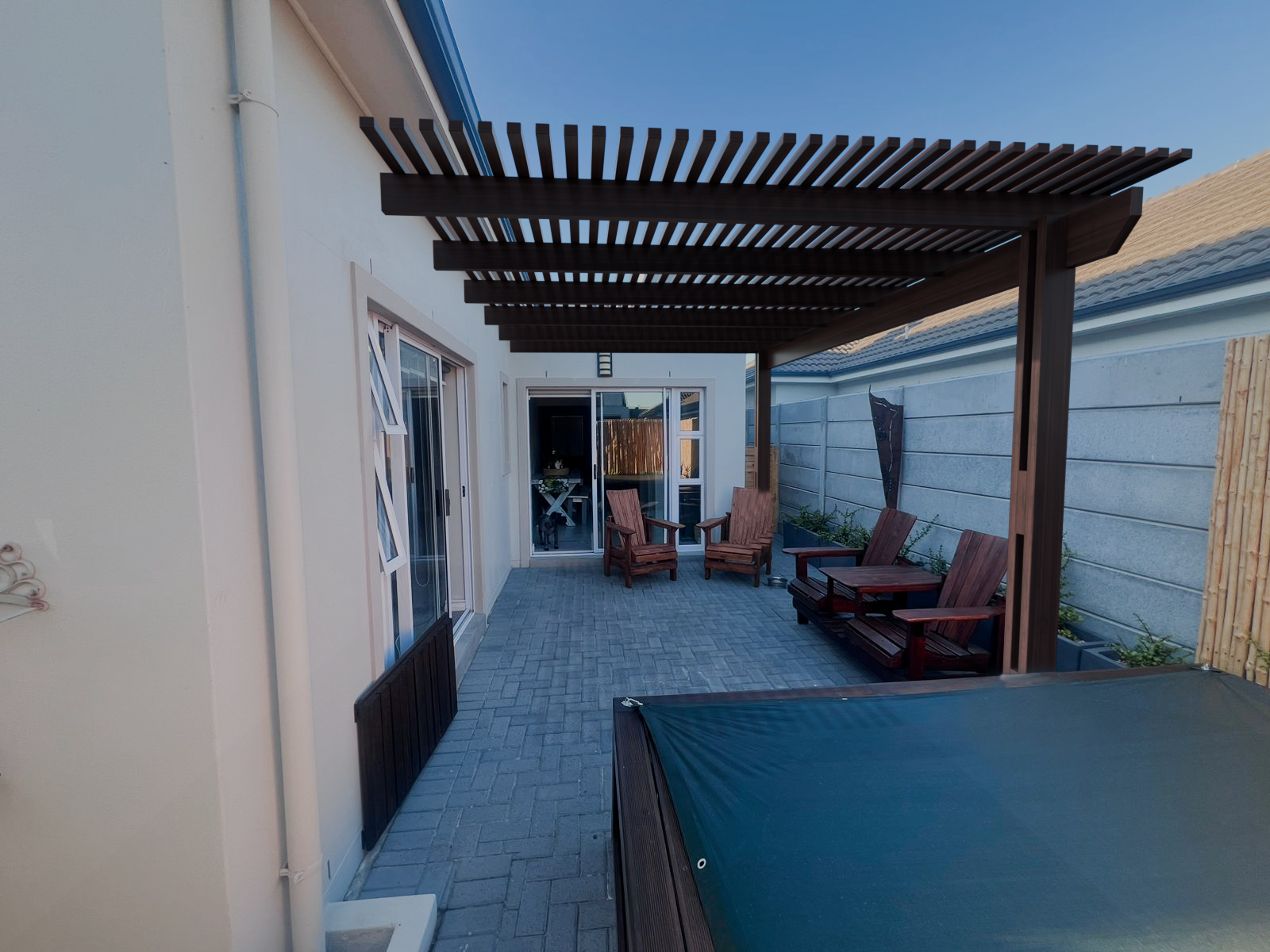
Before any construction or planning documents were prepared, Mr Pergola created a detailed 3D visualisation of the proposed structure. This step is standard on every project and serves a specific purpose: it allows the client to make confident decisions about dimensions, placement, and appearance before a single post is set.
The 3D model showed the full lean-to structure attached to the house wall, the open slatted roof design, column positioning, and the oak-tone stain finish on the timber. The client was able to review the proportions of the 4.9m span and confirm that the 2.86m depth would provide adequate coverage for their intended use.
“Seeing a realistic 3D version first gives our clients peace of mind and ensures the finished pergola looks exactly as they imagined it.” — Mr Pergola Cape Town
Adjustments to rafter spacing and batten layout were reviewed at this stage, so no changes were needed once construction began. This saves both time and cost on site.
PLANNING & APPROVALS
Architectural Plans and City of Cape Town Approval
Because this pergola was to be permanently attached to the home and erected on a residential property within a managed estate, a licensed architect was appointed to draft the formal structural plans. This is a step many contractors skip, but it is both legally required for certain structures and strongly advisable for any attached pergola that could affect a property’s compliance record or insurance.
The completed plans were submitted to the City of Cape Town for approval and were formally approved before any construction work commenced. This protects the homeowner in several important ways:
- The structure is legally compliant and will not create issues on future property sales
- Insurance cover for the outdoor area remains intact
- The estate’s body corporate requirements were met
- Any future modifications or additions can reference the approved baseline
Pro tip: Always insist on council-approved plans for any attached pergola. A pergola built without approval can trigger costly demolition orders or block a property transfer. Mr Pergola handles this process on your behalf.
Read more on pergola plan approval by the City of Cape Town

Materials Selection: Why Treated Pine Was Chosen
CCA H3 Treated Pine was selected as the structural timber for this project. Treated pine is a cost-effective and well-proven choice for outdoor pergola construction in Cape Town, particularly where the structure is covered or partially sheltered from direct rain and ground moisture.
The CCA (Chromated Copper Arsenate) H3 treatment classification means the timber has been pressure-treated to resist decay, fungal growth, and insect damage in above-ground exposed outdoor applications, precisely the conditions a lean-to pergola faces.
Structural Profiles Used
| Main beam | 228mm × 50mm — primary load-bearing member spanning the full 4.9m width |
| Rafters | 150mm × 50mm — carry the batten load and transfer weight to the beam and wall |
| Battens | 38mm × 50mm — spaced 50mm apart to create the open slatted roof pattern |
| Column (corner) | Brick construction with concrete footing |
| Hardware | Galvanised rafter brackets and stainless steel screws throughout |
Wood Finish: Oak Tone Sealant
Once the structure was fully erected and the timber had fully dried following a period of rain (as discussed in Section 6), the wood was sealed with Rystix Timbacre in an oak tone. Timbacre is a high-quality penetrating wood sealant that nourishes the timber fibres, repels moisture, and provides UV protection all critical factors for a structure exposed to Cape Town’s sun and seasonal rains.
The oak tone finish gives the pergola a warm, natural appearance that complements the home’s existing finishes without looking artificial or overly processed.
ENGINEERING DECISIONS
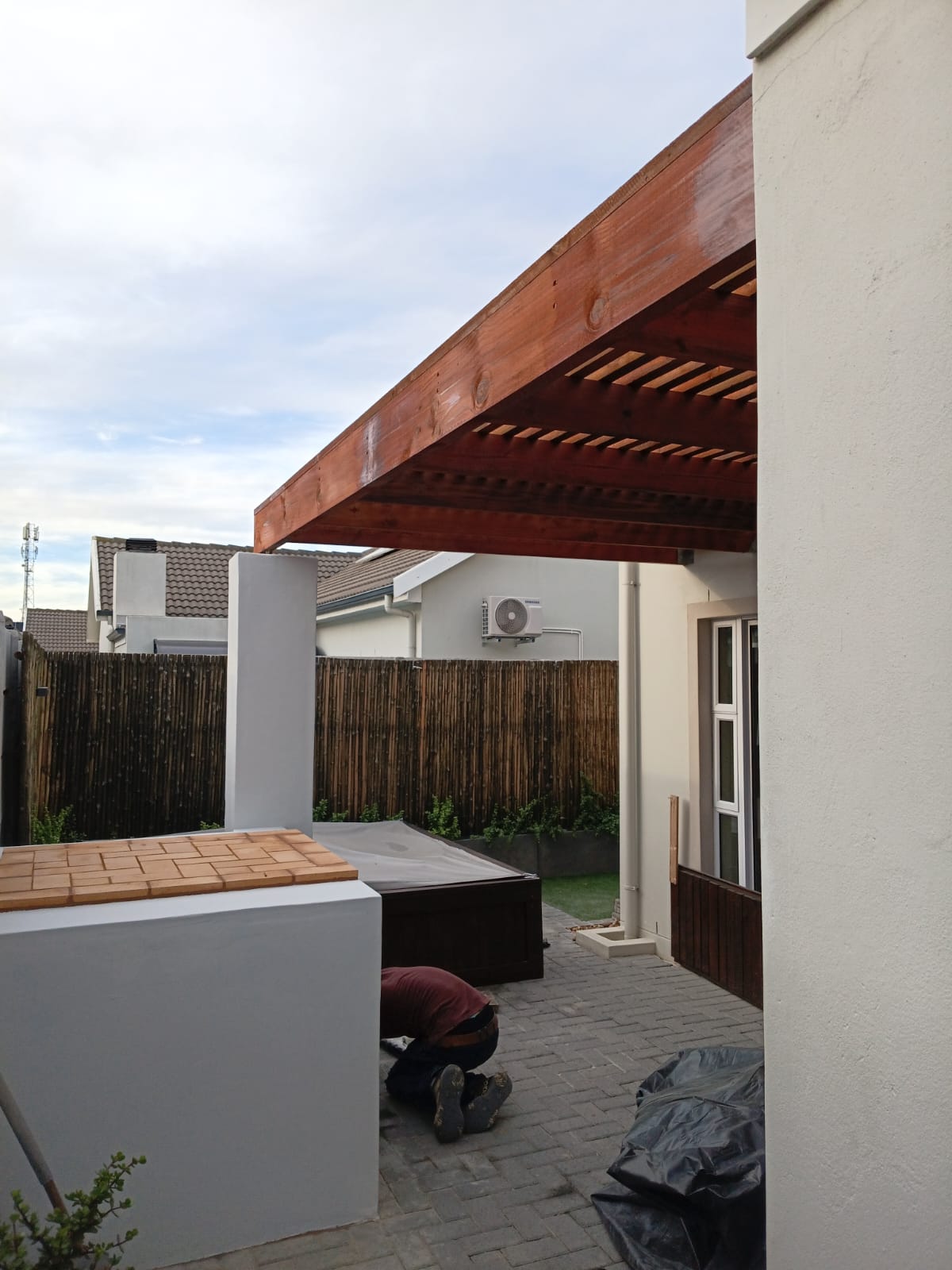
The Brick Column: A Deliberate Upgrade in Durability
One of the defining structural decisions on this project was the replacement of a standard timber post at one corner with a purpose-built brick column. This was not a cosmetic choice; it was an engineering one.
The lean-to design meant that one corner of the pergola would be freestanding, exposed to lateral wind loads, and would bear a significant portion of the beam’s weight. A standard 152mm × 50mm timber post would have been adequate by code, but the team assessed the site conditions at Stonewood Estate and recommended the brick column for the following reasons:
- Brick offers significantly higher compressive strength and lateral resistance than timber in exposed corner positions
- The column is immune to moisture-related degradation at the base, a common failure point for timber posts
- The mass and rigidity of a brick column reduces flex and vibration in the structure during strong Cape winds
- Long-term maintenance requirements are virtually zero compared to a treated timber post
Concrete Footing
The brick column was erected on a substantial concrete footing, sized and positioned to distribute the column’s load safely into the ground and prevent any settling or movement over time. The footing depth and mix specification were included in the architect’s approved drawings.
This is the kind of decision that separates a pergola that lasts 10 years from one that lasts 25. The brick column adds cost upfront, but it eliminates one of the most common long-term failure points.
INSTALLATION PROCESS
Installation: From Approved Plans to Completed Structure
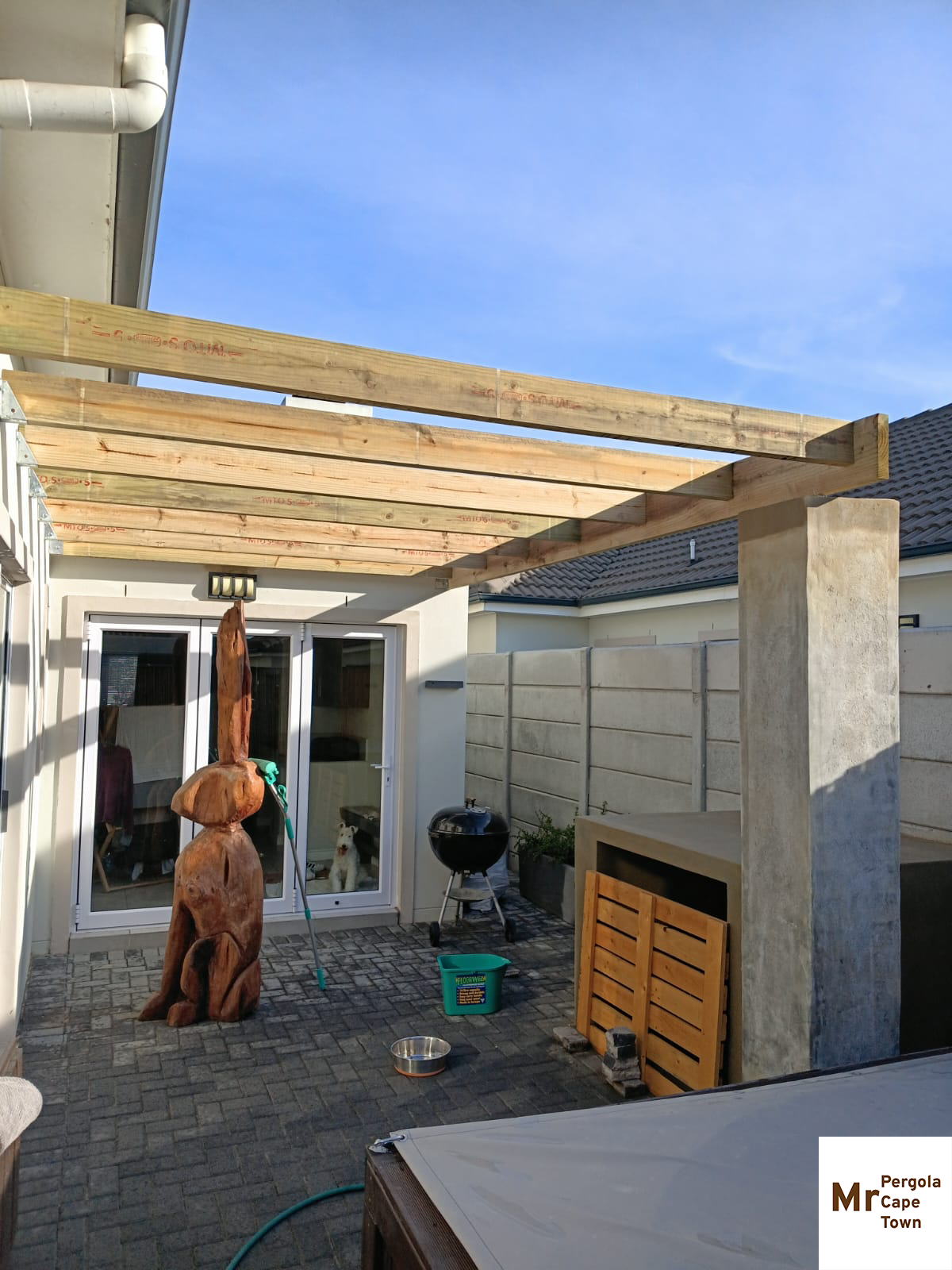
With 3D designs confirmed, architectural plans approved, and materials delivered to site, construction followed a clear and methodical sequence. The full installation was completed in two working days once the brick column and its footing were in place.
Step-by-Step Construction Sequence
1
Site preparation and accurate setting-out of column and post positions against the house wall
2
Excavation and casting of the concrete footing for the brick corner column
3
Bricklaying of the corner column, built to the required height to match the wall attachment point
4
Allowing the column and footing to cure to adequate strength before loading
5
Wall attachment: fixing the primary beam anchor to the house wall at the correct height and alignment
6
Installation of the 228mm × 50mm main beam across the full 4.9m span
7
Fitting of the 150mm × 50mm rafters at calculated spacing with galvanised brackets
8
Laying and securing of the 38mm × 50mm battens at 50mm open spacing
9
Structural check: alignment, level, spacing consistency, and hardware tightness
The Storm: How Adverse Weather Was Handled Professionally
Shortly after the structural installation was completed, Cape Town experienced a significant storm with heavy rainfall severe enough to cause flooding in several parts of the city. This is not unusual in a Cape winter, but it created a specific challenge on this project: the timber could not be sealed.
Applying sealant to wet or moisture-saturated timber is a common mistake made by inexperienced contractors and homeowners who apply sealant themselves. When timber is sealed while wet, the moisture becomes trapped inside the wood fibres. This leads to:
- Bubbling, peeling, and premature sealant failure within months
- Continued internal moisture causing the timber to swell, split, and warp
- Fungal growth beneath the sealant layer, accelerating decay
The Decision: Wait Seven Days
Rather than rush the finishing work to close out the project, the team made the professional decision to allow the timber to dry naturally for a full seven days after the storm passed. Only once the wood had sufficiently dried out, confirmed by physical inspection, was the Rystix Timbacre oak sealant applied.
This deliberate delay added time to the project timeline, but it ensured that the sealant bonded properly to clean, dry timber, maximising penetration, adhesion, and long-term protection.
“Sealing wet timber is one of the most common finishing mistakes in pergola construction. The product might look fine on day one, but within a year the sealant lifts and the wood deteriorates underneath it. We waited because the seven days are worth years of performance.” — Mr Pergola Cape Town
LONGEVITY
Why This Pergola Is Built to Last
Every decision made on this project, from the choice of CCA-treated pine to the brick column, the delayed sealing, and the use of galvanised and stainless steel hardware, was made with long-term performance in mind. Here is a summary of the durability measures built into this structure:
| CCA H3 Treated Pine | Pressure-treated to resist decay, fungi, and insects in outdoor above-ground exposure |
| Brick corner column | Zero moisture vulnerability at the base; superior wind resistance vs timber |
| Concrete footing | Prevents column settlement and lateral movement over time |
| Galvanised brackets | Corrosion-resistant rafter connections that maintain structural integrity |
| Stainless steel screws | Prevents rust streaking and fastener failure in outdoor conditions |
| Delayed sealant application | 7-day dry period ensured full sealant penetration and adhesion |
| Rystix Timbacare (Oak) | UV protection, moisture repellence, and nourishment for the timber fibres |
| Open slatted roof | Allows airflow and prevents moisture pooling on the battens |
| Council-approved plans | Architect-designed structural sizing for the specific load and span |
Maintenance Schedule
To keep this pergola performing at its best for decades, the following routine maintenance is recommended:
- Annual inspection of all fixings, brackets, and the brick column for signs of movement or damage
- Gentle cleaning with a mild detergent and water once a year to remove dirt, lichen, and bird debris
- Reapplication of Rystix Timbacare sealant every 2 to 3 years, or when the timber begins to look dry or grey
- Check the wall anchor points after any major storm to confirm they remain tight and sealed against water ingress
The Finished Pergola: A Permanent Outdoor Living Space
The completed lean-to pergola at Stonewood Estate delivers exactly what the clients set out to achieve: a well-proportioned, permanent outdoor area that extends the living space of their home. The 4.9m span provides generous coverage across the full width of the outdoor area, while the 2.86m depth creates a comfortable space for outdoor furniture, dining, and relaxed evening use.
The open 50mm slatted roof strikes the right balance between shade and airflow, filtering the harsh midday sun while maintaining the open-air feel that Cape Town outdoor living demands. The oak-toned finish ties the timber into the warm palette of the home, and the brick column adds a sense of permanence and craftsmanship that differentiates this structure from a standard timber-post pergola.
What Was Achieved
- A formally approved, permanent outdoor entertainment and resting area
- Full integration with the existing house wall via a lean-to attachment
- Superior corner stability through the purpose-built brick column
- A warm, natural aesthetic through the oak-toned sealant finish
- A structure designed to perform for decades with minimal maintenance
Questions Homeowners Ask About Pergola Installations Like This
This depends on the size and nature of the structure. Any pergola attached to the home or exceeding a certain footprint generally requires council-approved plans under Cape Town’s building regulations. Mr Pergola works with licensed architects to prepare and submit plans on behalf of clients. This project in Stonewood Estate received formal City of Cape Town approval before construction began.
The brick column was chosen at this specific corner because it provides higher lateral strength and long-term durability in an exposed freestanding position. Unlike timber posts, brick columns do not absorb moisture at the base and will not rot, split, or require periodic replacement. For pergolas with long spans or exposed corner loads, a brick column is a worthwhile upgrade.
CCA treated pine is an excellent choice for budget-conscious homeowners who want a durable, council-compliant structure. For higher-end applications or coastal environments, hardwoods such as Balau, Garapa, or Jatoba offer exceptional natural durability without chemical treatment. The right choice depends on the site, budget, and aesthetic preference.
A standard lean-to pergola of this size, 4.9m × 2.86m, can be fully installed structurally in two working days. The total project timeline, including design, architectural plans, council approval, construction, and sealing, depends on approval turnaround times and weather. On this project, a post-storm drying period of seven days was observed before the sealant was applied, which is best practice regardless of the weather.
Yes. Mr Pergola Cape Town installs wooden pergolas across the Northern Suburbs, including Kraaifontein, Durbanville, Brackenfell, Bellville, and surrounds. Every project begins with a free consultation and a 3D visualisation so you can see the design in your space before any work begins.